


Every summer, pools, beaches, and waterparks everywhere explode with activity. Families get together, children play in the water, and swimmers dive into waves without much regard for the lifeguard perched in a high chair observing them. Few individuals choose lifeguarding as a long-term career even if lifeguards are quite important in saving lives and guaranteeing safety.
Though lifeguard courses and certifications are more easily available now than ever, the profession is still beset by a persistent lack of skilled personnel. The result? Understaffed beaches, closed pools, and compromised safety for millions of Americans.
Then, why do most people avoid lifeguarding as a job and what impact does this tendency have on everyone? Let us investigate the several causes of this problem and what experts have to say.
Low Wages and Temporary Work
The meagre pay is one of the most important obstacles to seeking work as a lifeguard. Many lifeguard jobs provide pay that barely surpasses the minimum wage per hour. For adults wanting to create a long-term profession, this is not a dependable income even though it could be OK for teens searching for summer employment.
Read More: Lifeguard Training: A Complete Guide to Building Life-Saving Skills
Lifeguarding is mostly viewed as a seasonal career as well. Many areas only have public pools and beaches open during the summer months. This small window of employment discourages people from putting their time and money into lifeguard certification if they know they will be jobless for half the year. The seasonal character of the work makes it difficult to view lifeguarding as anything other than a short-term side gig.
Lack of Career Advancement Opportunities
Another important cause that lifeguarding is not regarded as a job is the lack of a defined route for advancement. Unlike other industries where people may ascend the corporate ladder, lifeguarding usually lacks organised advancement possibilities. Usually, once someone becomes a head lifeguard or aquatic supervisor, there aren’t many chances for advancement unless they move into leisure management or other fields.
For most people taking lifeguard classes, the job finishes once they leave college or go to jobs with superior compensation and stability. This stagnation lowers the perceived worth of investing in lifeguard courses and certifications and inhibits retention.
Intensive Training Requirements
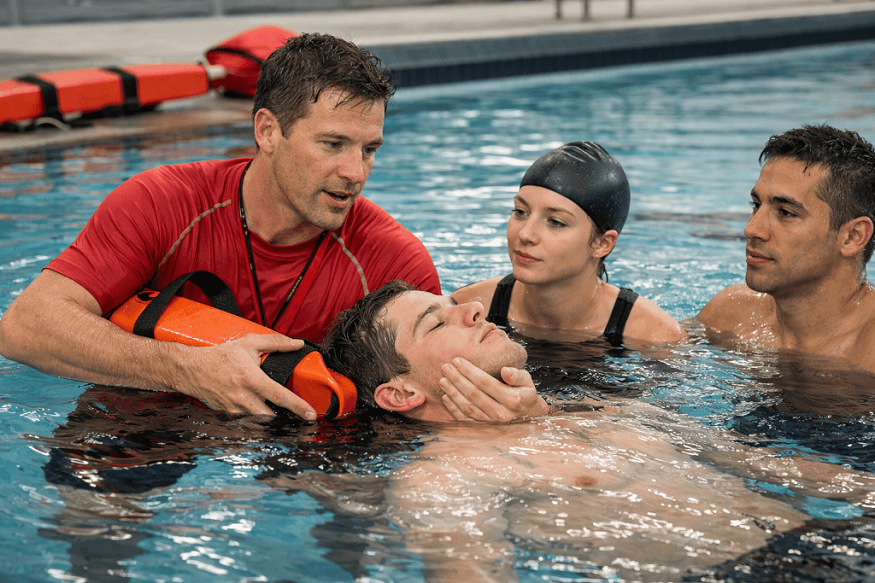
Becoming a licensed lifeguard is no easy task. Usually, the program includes intensive first aid training, physically demanding swim tests, and mastery of emergency response techniques. A demanding procedure meant to guarantee only the most competent people are given this vital job, lifeguard certification helps to guarantee this.
Though they can be a barrier for many, these demanding standards are vital for public safety. Particularly when the return on investment in terms of salary and job stability is small, the time, effort, and expense of lifeguard courses can be off-putting.
Legal Risk and Liabilities Issues
Legal obligation that accompanies the position is yet another sometimes forgotten factor preventing people from becoming full-time lifeguards. Lifeguards are responsible for the safety of swimmers, not only to monitor them. Serious legal repercussions could follow any error, omission, or tardiness in activity.
Very real in today’s litigious culture is the chance of being sued or accused following a drowning or damage. The public and legal system may still examine lifeguards even if they carry out their jobs exactly. This possible responsibility could turn off even the most skilled people from seeking a job as a lifeguard.
Changing Workforce Trends and Youth Disinterest
The employment scene has changed drastically over the past several decades. Particularly in technology, marketing, and ecommerce, many young people today are attracted to distant and digital jobs. Physical, on-site employment like a lifeguard seems old or less appealing when contrasted against the adaptability and scalability of digital work.
Furthermore, the attraction of rapid money offered by gig economy sites or influencer culture makes conventional occupations like lifeguarding seem less interesting. Fewer young people are signing up for lifeguard certification programs or lessons as a result of this change in professional goals, therefore creating a growing gap in qualified experts.
The Consequences of a Lifeguard Shortage
Not only is a lack of qualified lifeguards a personnel concern; it is also a public safety disaster. Many pools and beaches are forced to close or cut back hours annually since there aren’t enough licensed personnel to watch them safely. This raises the risk of drownings in unsupervised or congested locations in addition to restricting leisure possibilities.
Many studies and studies have drawn attention to the unequal impact of this shortage on disadvantaged neighborhoods, where public pools are already lacking. Especially among minority and low-income groups, a lack of access to secure swimming locations worsens drowning hazards.
Expert Analysis and the Role of the American Lifeguard Association
Better salaries, more thorough training incentives, and public awareness campaigns stressing the need for lifeguards are all part of a multipronged approach recommended by industry experts to solve this problem.
Often referenced as a top voice on water safety and the national effect of the lifeguard deficit, the American Lifeguard Association (ALA) is often quoted in both print and electronic media. The association has always called for more funding in lifeguard training courses and emphasized how understaffed beaches and swimming pools affect community health and safety in waves.
The ALA stresses that reversing this trend depends on widening access to lifeguard certification and training programs. Additionally, they emphasize how critical it is to improve the public’s view of lifeguards—not just as temporary workers but as essential public safety professionals.
Final Word: Time to Change your Perspective
One can clearly see that there is a perception problem with lifeguarding. Although lifeguards are very skilled, responsible for life-and-death decisions, and essential to public safety, they often get minimal respect, little income, and no definite route ahead.
Read More: Biology Assignment Writing Tips for Students
Solving the lifeguard scarcity will call for more than merely filling chairs; it will entail redefining how society sees and values the job. Encouragement of companies like the American Lifeguard Association and promotion of more access to lifeguard certification and courses can help to guarantee that this vital function is valued, honored, and finally sought as a long-term career by the next generation.







Leave a Reply